Single-Vehicle Accidents in Georgia: Your Complete Legal and Medical Guide
When most people think of car accidents, they picture two vehicles colliding. However, single-vehicle accidents account for a significant portion of roadway incidents in Georgia and can be just as serious—if not more so—than multi-vehicle crashes. Understanding your rights, legal options, and the critical steps to take after a single-vehicle accident can mean the difference between full recovery and long-term financial hardship.
At HURT 911® Injury Centers, we’ve helped thousands of Georgia accident victims navigate the complex aftermath of single-vehicle crashes. Whether you’ve hit a tree, rolled your vehicle, run off the road, or collided with a fixed object, you have more legal and insurance options than you might realize. Here’s everything you need to know about single-vehicle accidents in Georgia.
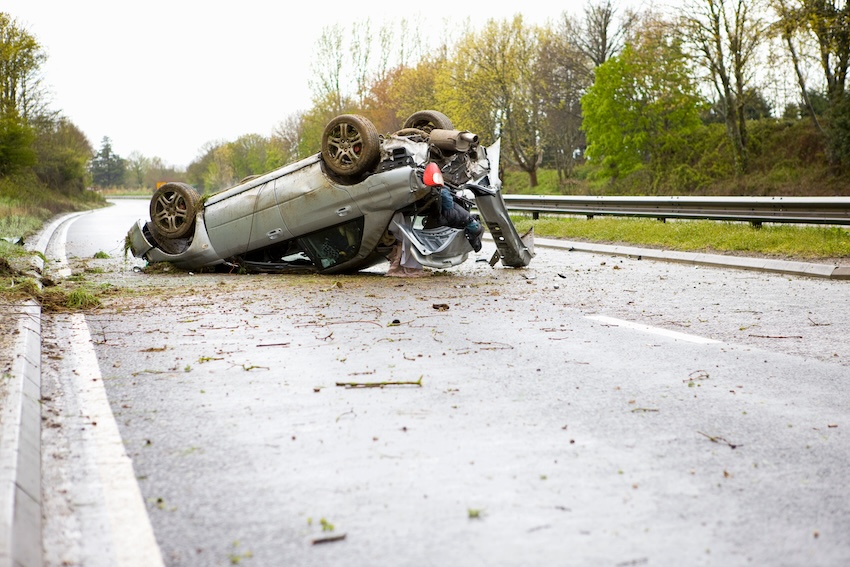
What Qualifies as a Single-Vehicle Accident in Georgia
A single-vehicle accident involves only one vehicle and typically includes scenarios where a car spins out of control, runs off the roadway, strikes a stationary object like a tree or guardrail, flips or rolls over, hits a pothole causing loss of control, collides with a deer or other animal, or crashes due to sudden mechanical failure.
Georgia Department of Transportation data shows that single-vehicle crashes account for approximately 35% of all traffic fatalities in the state. These accidents frequently result in serious injuries including traumatic brain injuries, spinal cord damage, broken bones, internal organ injuries, and severe lacerations.
Common Causes of Single-Vehicle Accidents in Georgia
While many people assume single-vehicle accidents are always the driver’s fault, numerous factors can contribute to these crashes. Understanding causation is critical for determining liability and pursuing compensation.
Driver-related factors include distracted driving, drowsy driving or falling asleep at the wheel, driving under the influence of alcohol or drugs, speeding or driving too fast for conditions, and inexperienced drivers overcorrecting during emergencies. Roadway hazards and defects contribute significantly to single-vehicle crashes: poorly maintained roads with potholes or uneven pavement, missing or obscured road signs and traffic signals, inadequate lighting on rural roads, lack of guardrails on dangerous curves, debris in the roadway, construction zones without proper warnings, and ice, snow, or standing water creating hazardous conditions.
Vehicle defects and mechanical failures can also cause single-vehicle accidents: brake system failures, tire blowouts due to defective tires or improper maintenance, steering system malfunctions, accelerator pedal defects causing unintended acceleration, airbag deployment failures, and defective electronic stability control systems.
Georgia Law and Single-Vehicle Accident Liability
Georgia operates under a modified comparative negligence system governed by O.C.G.A. § 51-12-33. This legal framework significantly impacts your ability to recover compensation after a single-vehicle accident.
Understanding Georgia’s Comparative Negligence Rule
Under Georgia law, you can recover damages even if you’re partially at fault for your accident, as long as you’re less than 50% responsible. Your compensation is reduced by your percentage of fault. For example, if you suffered $100,000 in damages but were 30% at fault for the accident, you could recover $70,000. However, if you’re found 50% or more at fault, you recover nothing.
According to the State Bar of Georgia, many single-vehicle accident victims fail to pursue valid claims because they mistakenly believe they have no legal recourse. In reality, third-party liability often exists even in single-vehicle crashes.
When Third Parties May Be Liable
Multiple parties beyond the driver may bear responsibility for single-vehicle accidents in Georgia. Government entities can be liable when poor road maintenance, defective road design, missing or damaged guardrails, obscured or missing traffic signs, or inadequate road lighting contribute to crashes. Georgia’s Tort Claims Act (O.C.G.A. § 50-21-1 et seq.) governs claims against state and local governments, requiring notice within strict deadlines—typically six months for local governments and twelve months for state entities.
Vehicle manufacturers face liability when defective parts or design flaws cause accidents. Georgia product liability law allows claims for manufacturing defects, design defects, and failure to warn. Property owners may be responsible if hazards on private property adjacent to roads contribute to accidents, such as overgrown vegetation obscuring sight lines or improperly maintained private driveways. Third-party drivers can share liability even without direct collision if they forced you off the road, cut you off causing evasive maneuvers, or engaged in aggressive driving that contributed to your crash.
Critical Steps to Take After a Single-Vehicle Accident in Georgia
Step 1: Ensure Safety and Call 911 Immediately
Your first priority is safety. If you’re able to move and your vehicle is creating a traffic hazard, carefully move it to the shoulder if possible. Turn on hazard lights to alert other drivers. Call 911 even if injuries seem minor—many serious injuries have delayed symptoms.
Georgia law (O.C.G.A. § 40-6-273) requires reporting any accident resulting in injury, death, or property damage exceeding $500. Failure to report can result in license suspension and criminal charges. Stay at the scene until police arrive unless you require immediate medical transport.
Step 2: Limit Movement and Assess Injuries
If you’re injured, remain as still as possible until emergency medical personnel arrive. Single-vehicle accidents frequently cause spinal injuries, and moving can exacerbate damage or cause paralysis. Symptoms indicating potential spinal injury include numbness or tingling in extremities, inability to move limbs, severe back or neck pain, loss of bladder or bowel control, and difficulty breathing.
Even if you feel fine, adrenaline can mask serious injuries. Common delayed-symptom injuries from single-vehicle crashes include concussions and traumatic brain injuries, internal bleeding, soft tissue injuries like whiplash, and herniated discs.
Step 3: Cooperate With Police but Protect Your Rights
When Georgia State Patrol or local police arrive, provide factual information about what happened. Describe road conditions, weather, visibility, and any hazards you encountered. However, avoid making definitive statements about fault. Phrases like “I wasn’t paying attention” or “It was completely my fault” can be used against you even if other factors contributed significantly.
The responding officer will complete a Georgia Uniform Motor Vehicle Accident Report. Request the report number and information on how to obtain a copy. This official documentation is crucial for insurance claims and any potential legal action.
Step 4: Document Everything at the Scene
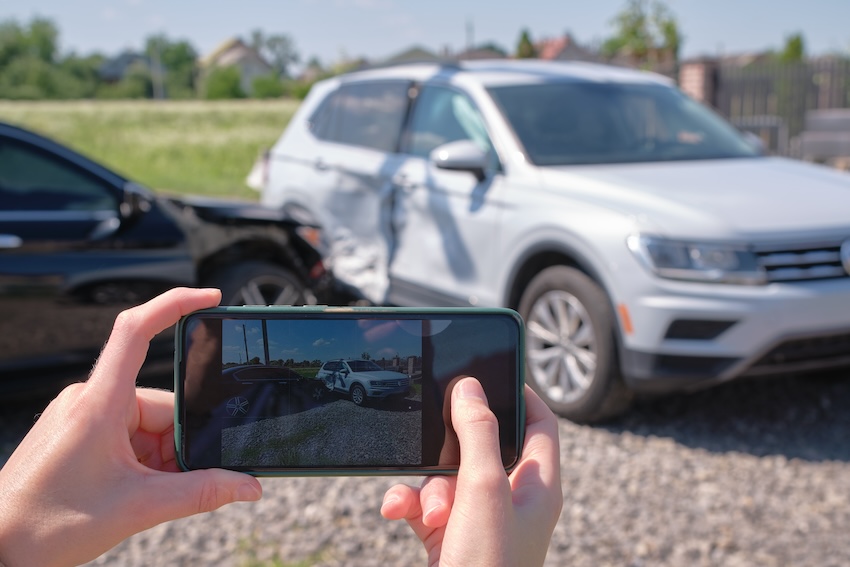
If you’re physically able, comprehensive evidence collection is critical for protecting your claim. Use your smartphone to photograph vehicle damage from multiple angles, the final resting position of your vehicle, skid marks or tire tracks, roadway conditions including potholes, debris, or standing water, road signs (or absence of expected signs), guardrails or lack thereof, weather conditions, and any visible injuries.
Take wide-angle shots showing the overall scene and close-ups of specific details. If your phone was damaged or you’re unable to document the scene immediately, return as soon as possible before conditions change or municipalities make repairs.
Record witness information if anyone saw your accident or stopped to help. Even in single-vehicle crashes, witness testimony about road conditions or hazards can be valuable. Note the exact location using GPS coordinates or specific mile markers, time of day and lighting conditions, recent weather, and your recollection of events while memory is fresh.
Step 5: Seek Immediate Medical Evaluation
Even if emergency transport isn’t necessary, see a doctor within 24 hours of your accident. Many serious injuries including concussions, internal bleeding, and spinal damage don’t present obvious symptoms immediately. Delaying medical care gives insurance companies ammunition to argue your injuries weren’t serious or weren’t caused by the accident.
HURT 911® operates six convenient injury centers throughout the Atlanta metro area providing immediate accident injury treatment. Our car accident doctors specialize in diagnosing and treating collision injuries including whiplash, back pain, spinal injuries, and soft tissue damage. Best of all, treatment is provided with zero out-of-pocket costs to you.
Step 6: Report to Your Insurance Company Carefully
Georgia requires you to notify your auto insurance carrier promptly after any accident. Most policies mandate reporting within 24-72 hours. However, be strategic in how you communicate with insurers.
Provide basic facts: date, time, location, general description of what happened. Avoid detailed discussions about injuries, fault, or circumstances until you’ve consulted with professionals. Do not provide recorded statements without legal guidance, sign medical record releases giving blanket access to your entire medical history, or accept quick settlement offers before understanding your full injuries and damages.
Remember that even your own insurance company is motivated to minimize payouts. Their adjusters are trained to elicit statements that reduce claim value.
Step 7: Contact HURT 911® Before Accepting Any Settlement
Before making any decisions about your claim, call HURT 911® at 1-800-HURT911 (1-800-487-8911) or 404-687-9000. We provide immediate connections to experienced personal injury attorneys who specialize in Georgia single-vehicle accident cases.
Many victims accept inadequate settlements because they don’t understand their full legal rights or the true value of their claims. Our attorney referral team includes specialists who have recovered millions for Georgia accident victims.

Insurance Coverage for Single-Vehicle Accidents in Georgia
Types of Coverage That May Apply
Multiple insurance coverages may provide compensation after a single-vehicle accident. Collision coverage pays for vehicle damage regardless of fault, covering repairs or replacement value minus your deductible. This coverage is optional in Georgia but required by lenders for financed vehicles.
Comprehensive coverage addresses damage from non-collision events including hitting animals, weather-related damage, and falling objects. Medical payments coverage (MedPay) pays medical expenses regardless of fault, typically ranging from $1,000 to $10,000 in Georgia policies. This coverage provides immediate funds for treatment without waiting for liability determinations.
Personal injury protection (PIP) is optional in Georgia and covers medical expenses, lost wages, and other costs regardless of fault. Uninsured/underinsured motorist coverage can apply in single-vehicle accidents if another driver contributed by forcing you off the road but fled the scene or lacks adequate insurance.
Third-Party Liability Claims
Don’t assume your own insurance is your only option. If road defects caused your crash, the responsible government entity’s liability insurance may cover damages. If vehicle defects contributed, the manufacturer’s product liability insurance applies. If another driver’s actions caused your evasive maneuver, their liability insurance may cover your damages even without direct contact.
Identifying all potentially liable parties requires thorough investigation. The attorneys HURT 911® connects you with conduct comprehensive reviews to maximize your recovery from all available sources.
Common Single-Vehicle Accident Injuries and Treatment
Single-vehicle crashes often produce severe injuries due to high-impact forces and lack of energy dissipation across multiple vehicles.
Traumatic Brain Injuries
Head impacts against steering wheels, dashboards, or side windows frequently cause concussions and more serious traumatic brain injuries. Symptoms include headaches, confusion, memory problems, dizziness, nausea, sensitivity to light or sound, and personality changes. TBI requires immediate evaluation and ongoing monitoring.
Spinal Cord Injuries
The violent forces in single-vehicle crashes can cause spinal fractures, herniated discs, and spinal cord damage. Our car accident chiropractors specialize in diagnosing and treating spinal injuries using advanced diagnostic imaging and evidence-based treatment protocols.
Soft Tissue Injuries
Whiplash, muscle strains, ligament sprains, and tendon damage are common in single-vehicle accidents. While sometimes dismissed as minor, these injuries can cause chronic pain and disability without proper treatment. HURT 911® provides comprehensive physical therapy to ensure complete recovery.
Fractures and Broken Bones
Arms, legs, ribs, and facial bones frequently fracture in single-vehicle crashes. These injuries require immediate orthopedic evaluation, potential surgery, and extensive rehabilitation.
Why You Need Professional Help After a Single-Vehicle Accident
Many Georgians involved in single-vehicle accidents fail to seek legal counsel because they assume they have no case. This costly mistake leaves money on the table and can result in inadequate medical treatment.
Identifying Hidden Liability
Experienced attorneys investigate factors you might not recognize as contributing to your crash. They obtain traffic engineering reports, review road maintenance records, analyze weather data, inspect your vehicle for defects, interview witnesses, and consult accident reconstruction experts.
Maximizing Insurance Recovery
Attorneys understand which insurance coverages apply and how to maximize recovery from each source. They negotiate with adjusters who respect legal representation, document all damages comprehensively including future medical needs and lost earning capacity, and file lawsuits when necessary to obtain fair compensation.
Protecting You From Insurance Tactics
Insurance companies use sophisticated strategies to minimize single-vehicle accident claims including early settlement offers before you understand injury severity, arguments that you were solely at fault, downplaying road hazards or vehicle defects, and using your statements against you. Legal representation neutralizes these tactics.
Georgia’s Statute of Limitations for Single-Vehicle Accidents
Georgia law imposes strict deadlines for filing lawsuits. Under O.C.G.A. § 9-3-33, you have two years from the accident date to file personal injury claims. Property damage claims also carry a two-year deadline. However, claims against government entities require much shorter notice periods—often six to twelve months.
Missing these deadlines means permanently losing your right to compensation regardless of how strong your case is. Don’t delay seeking legal guidance.
Take Action Now: Your Recovery Starts With HURT 911®
If you’ve been injured in a single-vehicle accident anywhere in Georgia, HURT 911® provides the comprehensive support you need to recover physically, financially, and legally.
Immediate Medical Treatment at Convenient Locations
We operate injury centers throughout the Atlanta metro area in Downtown Atlanta, West End, Lithonia, Decatur, McDonough, and Morrow. Find your nearest location using our office locator. Our board-certified doctors and chiropractors provide complete diagnostic and treatment services with zero out-of-pocket costs.
Expert Attorney Referrals
We connect you with top-rated personal injury attorneys who specialize in Georgia single-vehicle accident cases. These legal professionals work on contingency—you pay nothing unless they recover compensation for you.
Complete Accident Recovery Support
From your first call through final settlement, HURT 911® manages every aspect of your recovery. We handle medical treatment coordination, insurance communication, legal representation connection, documentation and evidence gathering, and ongoing case management.
Our proven system works: Get Better. Get Paid.
Frequently Asked Questions About Georgia Single-Vehicle Accidents
Can I receive compensation if I was the only vehicle involved?
Yes. Even in single-vehicle accidents, you may have valid claims against government entities for road defects, vehicle manufacturers for defective parts, property owners for hazardous conditions, or other drivers who contributed to your crash. Your own insurance may also provide coverage through collision, comprehensive, MedPay, or PIP coverage.
What if I think the accident was my fault?
Don’t make assumptions about fault. Many factors invisible to you may have contributed including road defects, vehicle malfunctions, or actions by other drivers. Professional investigation often reveals liability you didn’t recognize. Even if you share some fault, Georgia’s comparative negligence law allows recovery as long as you’re less than 50% responsible.
How long do I have to file a claim in Georgia?
Two years for most personal injury and property damage claims, but as little as six months for government entity claims. Insurance policy provisions may require even faster notification. Contact HURT 911® immediately to ensure you meet all deadlines.
Will my insurance rates increase after a single-vehicle accident?
Possibly, depending on your insurance company’s policies and your driving history. However, concerns about rate increases shouldn’t prevent you from reporting accidents or seeking proper medical treatment and legal representation. The financial impact of uncompensated injuries and damages far exceeds any premium increase.
What if I don’t have collision coverage?
You may still have coverage through comprehensive insurance, MedPay, PIP, or uninsured motorist coverage depending on your policy. More importantly, third-party liability claims don’t depend on your insurance coverage. If someone else’s negligence contributed to your crash, their insurance covers your damages.
Contact HURT 911® Today for Your Free Consultation
Don’t navigate the aftermath of a single-vehicle accident alone. HURT 911® has helped thousands of Georgia accident victims get the medical treatment and legal representation they need to recover fully.
Call 1-800-HURT911 (1-800-487-8911) or 404-687-9000 now.
We answer 24/7 because accidents don’t happen on a schedule. Learn more about our services or request a free consultation online.
You deserve full compensation for your injuries and damages. Let HURT 911® fight for the recovery you deserve while you focus on healing.
About HURT 911® Injury Group: Georgia’s trusted accident injury specialists providing comprehensive medical treatment and attorney referrals for all types of accidents including single-vehicle crashes, multi-vehicle collisions, truck accidents, motorcycle accidents, and pedestrian accidents. Serving Atlanta, Decatur, Lithonia, McDonough, Morrow, and surrounding Georgia communities with six convenient locations. Zero out-of-pocket medical costs. Available 24/7.


